JUMLA (Nepal), December 30 — The Food and Agriculture Organization of the United Nations (FAO) has launched an initiative in the mountainous district of Jumla to strengthen climate resilience and provide alternatives to forced migration for rural communities.
Operating since November 2024, the project, titled "Enhancing resilience and empowerment in communities at risk of climate-induced migration," works in partnership with the Karnali Integrated Rural Development Center (KIRDARC). The program focuses on adapting farming practices to environmental changes, including unpredictable rainfall, decreasing snowfall, and frequent landslides that have compromised traditional livelihoods.
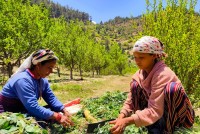
In Jumla, the project has established 12 Farmer Field Schools (FFS) involving 300 participants, including 197 women and 103 men across nine wards. Participants receive training in sustainable apple farming and climate-adaptive techniques such as making biochar and enrich soil with organic fertilizer, mulching, grow legumes and vegetables alongside their apple trees, use biological pest control, and improve pollinator habitats – practices that help restore soil health, boost productivity and protect ecosystems. Six farmer groups also began cultivating previously unused land collectively, sharing knowledge and repurposing abandoned land.
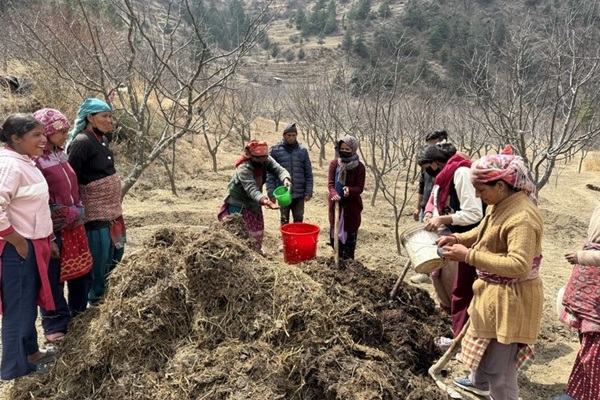
To address water scarcity, the initiative supported the construction of six soil-cement water tanks with assistance from trained local builders to provide a consistent water supply for households and crops. Additionally, six farmer groups have begun the collective cultivation of previously abandoned or unused land.
"Farming is my main occupation, and I will continue to do so as long as my health allows. Earlier, we used to do farming in a traditional way, which was unorganized, but now, through the Farmers Field School, we have learned about organic practices." said beneficiary Kalpana Hamal.
The project also targets safe migration and climate adaptation through information dissemination via local radio, pamphlets, and posters. These efforts aim to help residents make informed decisions regarding mobility, while youth sensitization sessions address climate action and safe migration within their communities.
Implemented in both Nepal and Uganda, the project is funded through the FAO Flexible Voluntary Contribution mechanism. It seeks to integrate human mobility into local development and climate adaptation plans by engaging diaspora networks and strengthening government capacities.