My love for cooking started about 65 years ago. I am 74 now. Back then, as a young boy, I would walk with my father to buy a goat for Dashain—our festival of good defeating evil. That smell of spices, the laughter in the market, the fire of the kitchen—it planted a seed. But for decades, I kept that seed hidden.
Then, in April 2017, I read about Chef Sanjeev Kapoor. He was awarded the Padma Shri, but he refused to wear the official Indian attire for the ceremony. He wanted his chef’s white uniform. They said no. He said he wouldn’t come. Finally, they allowed it. He received one of India’s highest honors in his chef’s coat. I never forgot that.
My Story
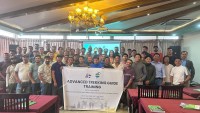
Years later, an official ceremony invited five-star hotel chefs to train local people in cooking at a traing institute. To my surprise, they asked me to be the chief guest. I agreed—on one condition: I would come in a white chef’s dress with the cap. I would not pretend to be someone else. They accepted.
So I stood there, in front of 35 participants, making smoky fusion Thai chicken red curry. A live cooking class. The heat, the questions, the laughter—it was pure joy. Afterward, a journalist asked, “Where do you work?” 'I am unemployed,' I said. A participant quickly added, “He’s an engineering professor.” The journalist apologized, embarrassed. She hadn’t realized I was a professor. I smiled. “It’s not your fault,” I said. “I was dressed as a chef.”
The Lesson
That day, I learned something deeper than any engineering formula. In developing countries, we often feel shy to say we are chefs or mechanics or tailors. We bow to titles like “doctor” or “engineer,” but we look down on the hands that feed us, fix our homes, and build our lives. That mentality must end.
Every profession has its own pride, its own prestige. A chef’s cap is no less noble than a professor’s robe. The younger generation must understand: don’t chase a title. Chase the love for what you do. And wear it with honor—even if no one else claps.
There are moments in life when we are quietly asked a question—not by others, but by our own conscience: 'Who are you, really, when no title stands beside your name?'
In our part of the world, we have built invisible walls between professions. We glorify some and quietly dismiss others. We chase degrees, not always out of passion, but often out of fear—fear of judgment, fear of status, fear of being seen as “less.” But tell me—what is less about the hands that cook your food, build your home, fix your roads, stitch your clothes? What is inferior about creation, about skill, about dedication? Nothing—except the way we choose to see it.
"Wear your work with pride"
That day, wearing a chef’s cap, I did not lose my identity as a professor. I expanded it. I broke a silent barrier—not just for myself, but, I hope, for those who watched. To the younger generation, standing at the crossroads of expectation and passion, I say this:
1. Do not shrink yourself to fit into society’s narrow definitions of success.
2. Do not abandon what you love because it does not sound impressive at a family gathering.
3. And never be ashamed of the tools you hold in your hands—whether it is a ladle, a hammer, a keyboard, or a pen.
Wear your work with pride. Be so deeply connected to what you do that you would carry its symbol anywhere—even into the grandest halls of recognition—without hesitation, without apology. Because real success is not when the world applauds your title. It is when your soul recognizes your work and says, this is mine. And that day, whether you are called a chef or a professor will no longer matter. You will simply be yourself—and that is the highest honor of all.