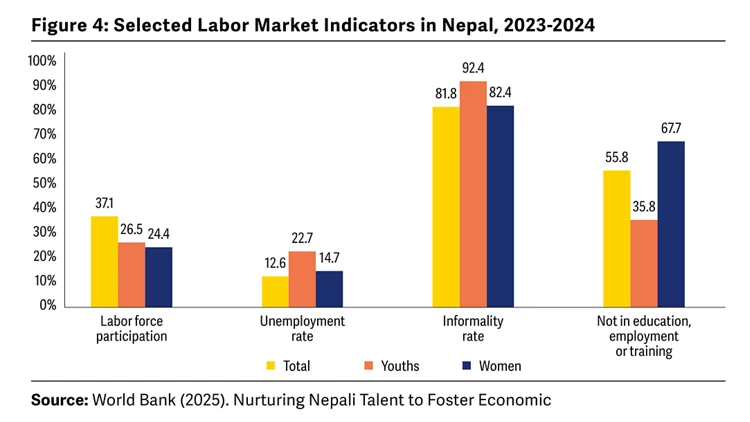
KATHMANDU, January 4 — Nepal must create 6.5 million jobs over the next 30 years to accommodate its growing working-age population, according to a new World Bank report.
Titled the "Nepal Human Capital Review", the report stresses that fulfilling this requirement will be impossible under a "business as usual" approach and necessitates a comprehensive rethinking of national investment strategies.
The findings align with the Government of Nepal’s 16th Plan, a five-year development strategy designed to elevate the country to upper-middle-income status within twenty years. However, the World Bank notes that realizing these ambitions depends on a significant increase in public spending toward healthcare, nutrition, and education, particularly in historically marginalized areas.
According to the review, the government must transition its focus from merely providing access to services to ensuring the quality of those services. This involves supporting teachers with enhanced training and tools while ensuring public health facilities are properly equipped with medical supplies and skilled staff. Furthermore, the report emphasizes the importance of early childhood care and learning support as a foundational step for the next generation.
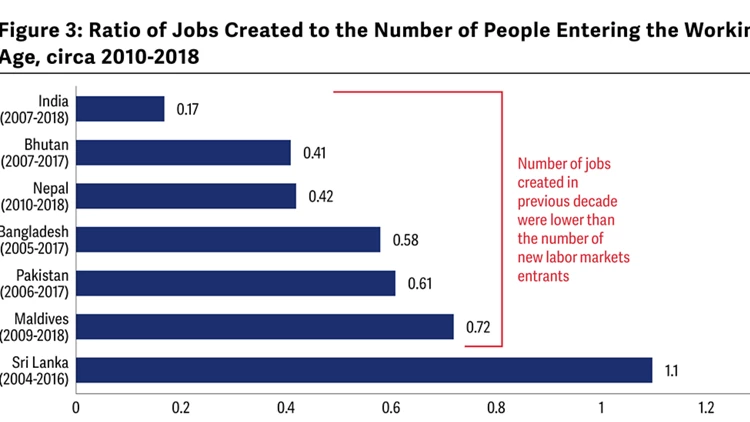
A critical component of this transition involves bridging the gap between classroom instruction and the demands of the job market. The World Bank recommends expanding access to career guidance, apprenticeships, and hands-on learning. It also highlights the necessity of strengthening ties between training providers and employers to ensure vocational and technical education remains relevant.
The review concludes that Nepal’s young population represents a significant engine for growth, provided that investments in human capital are prioritized. By ensuring high-quality education and lifelong learning opportunities for youth in underserved regions, the country can move toward a future where a child’s economic prospects are no longer determined by their place of birth.