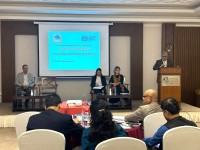
KATHMANDU, February 5 — Nepal is finalizing a national strategy to accelerate job creation and expand social protection following a two-day consultation on the proposed National Roadmap for Jobs and Social Protection for Just Transitions held from February 5–6.
The National Planning Commission (NPC) organized the workshop in partnership with UN agencies- ILO, UNICEF, UNDP and UN Women under the framework of Global Accelerator on Jobs and Social Protection for Just Transitions. The consultation marks a decisive step towards finalizing the roadmap that responds to Nepal’s evolving economic, labour market and climate realities
As Nepal faces intersecting challenges including climate change and structural economic shifts to informality, graduation from the LDC, youth unemployment and gaps in social protection, the draft roadmap provides a coherent, evidence-based framework to generate decent jobs while expanding social protection coverage in a way that is inclusive, gender-responsive and sustainable.
During the opening sessions, NPC Member Dr. Sunity Shrestha Hada identified the urgent need to create domestic opportunities to reduce youth migration and resolve gender wage gaps. She noted that while there is high employment potential at provincial and local levels, the national roadmap is essential for providing clear direction and an actionable path forward.
Expert presentations during the event detailed the research underpinning the strategy. Macroeconomics expert Dr. Dilli Raj Khanal shared analytical findings, while former NPC member Dr. Ram Kumar Phuyal presented a strategic review of the nation’s social protection policies. These presentations were intended to ensure the roadmap aligns with institutional capacities and national development priorities.
The workshop concluded with remarks from NPC Vice Chairman Dr. Prakash Kumar Shrestha, who stated that the validated roadmap will serve as a strategic instrument for the government. The finalized plan is expected to guide policy reforms and financing approaches to deliver decent work and a more resilient economy.