KATHMANDU, January 19 — An assessment by the International Labour Organization (ILO) has found that while Nepal has successfully established a nationwide network of Employment Service Centres (ESCs), the system is currently failing to function as a modern Public Employment Service (PES).
The report, titled Assessment of Public Employment Services and Labour Market Policies in Nepal, was conducted in collaboration with the Ministry of Labour, Employment and Social Security (MoLESS). It reveals a significant disconnect between the government's policy intentions and the actual delivery of services at the municipal level.
Functional Gaps in Service Delivery
According to the findings, the activities of most ESCs are currently restricted to the "Cash for Work" component of the Prime Minister Employment Programme (PMEP). Broader functions essential to a modern labor market—such as career guidance, labor market information, job matching, and employer services—remain uneven or nonexistent.
The report identifies weak engagement with the private sector as a primary constraint. Survey data indicates that 63 percent of ESCs do not register job vacancies at all. Among the centers that do record vacancies, the majority are from the public sector, highlighting a lack of trust and service scaling within the private sector.
Digital and Infrastructure Bottlenecks
Digital readiness remains a critical barrier to modernization. The ILO found that approximately 51 percent of ESCs lack any IT-based registration system. In locations where digital systems are present, many were reported as being only partially operational.
The assessment further documented several practical obstacles hindering service quality, including (A) inadequate data management and bureaucratic inefficiencies (B) Persistent staff vacancies and a lack of specialized training for existing personnel (C) Substandard physical infrastructure and weak outreach efforts and (D) Low levels of awareness among both jobseekers and potential employers.
Recommendations for Modernization
The ILO concludes that while Nepal’s legal foundations for employment services are strong, the system is held back by deficiencies in coordination, management, financing, and digital infrastructure. To address these issues, the report outlines five central policy recommendations:
Unified Policy Framework: The adoption of a national PES policy that is standardized yet adaptable for federal, provincial, and local government tiers.
Governance and Social Dialogue: Strengthening mechanisms to ensure that workers' and employers' organizations contribute to policy development, consistent with ILO Convention No. 88.
Employer-Facing Services: Developing strategies to increase vacancy transparency and align skills development with actual labor demand to build private-sector trust.
National Information System: The creation of a centralized Labour Market Information System (LMIS) and job portal to link all levels of government.
Phased Implementation: A "pilot, learn, and scale" approach to test new delivery models before expanding them nationwide.
Institutional Response
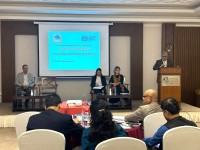
During a national dissemination event hosted by MoLESS and the ILO, government and development partners discussed the roadmap for reform.
"This assessment shows Nepal’s ESC network has real potential, but it must shift from primarily delivering short-term measures to providing modern job matching and employer services, backed by strong governance and digital systems," said Numan Özcan, ILO Country Director for Nepal.
Dr. Dipak Kafle, Secretary of MoLESS, stated that the report would serve as a guideline for the ministry and that officials will cooperate in implementing its principles. Krishna Prasad Sapkota, Joint Secretary of the Internal Employment Management Division at MoLESS, added that the national PES policy framework and related documents would be developed based on these specific recommendations.
Jasmine Rajbhandari, Social Protection Specialist at World Bank Nepal, also commended the findings and urged the government to move forward with the implementation of the reforms.
The assessment was produced under the ILO’s Strengthening of Employment Service Centres in Nepal (SESC) project. The initiative is implemented in collaboration with MoLESS and receives support from the Swiss Agency for Development and Cooperation (SDC) alongside other development partners.
Moving forward, the ILO stated it will continue to support tripartite constituents in translating these findings into a practical roadmap focused on governance, digital delivery, and employer partnerships to connect citizens with decent work.