Paro, Bhutan, 3 December – The United Nations Framework Convention on Climate Change (UN Climate Change) and the International Centre for Integrated Mountain Development (ICIMOD) launched the Hindu Kush Himalaya Regional Climate Action Transparency Hub (HKHRCATH) on 2 December 2025, with a focus on enhancing capacity building and and promote data and experience sharing across the region.
The launch is a milestone in the three-year memorandum of understanding between ICIMOD and the UNFCCC, establishing a dedicated platform for ICIMOD’s eight Regional Member Countries (RMCs): Afghanistan, Bangladesh, Bhutan, China, India, Nepal, Myanmar, and Pakistan. The hub aims to foster sustained capacity building across the region by promoting data sharing and enabling countries to better support national decision-makers in accelerating climate action and implementing transparent climate reporting.
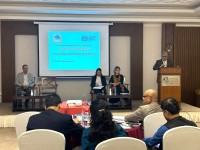
Launched during a Regional Stakeholders Consultation Workshop in Paro, Bhutan, the event brought together country representatives to identify priority actions for implementing the Paris Agreement’s Enhanced Transparency Framework (ETF) in the HKH region.
“This is a leap forward in increasing the pace of climate action in the region,” said Pema Gyamtsho, Director General of ICIMOD. “The transparency hub will be a platform for all countries of the HKH to understand their progress on commitments, define challenges, and collaborate on shared climate issues. It will enhance our the capacity of our Regional Member Countries in delivering and reporting their commitments.”
Speaking for the UNFCCC secretariat, Jigme, Manager of the Transparency division, said, “The enhanced transparency framework (ETF) is not merely a technical reporting requirement; it is the backbone of mutual trust and collective ambition. The ETF is the mechanism that allows us all to see clearly: where progress is being made on Nationally Determined Contributions (NDCs), where support is most needed, and what climate impacts are demanding our urgent attention. For the HKH region, robust transparency is critical. The fragility of mountain ecosystems and the shared vulnerability to climate change demand timely, reliable, and robust information to inform effective evidence-based policy and resource mobilisation.”
The hub is designed to enable participating countries to better support national decision-makers, investors, and stakeholders in accelerating mitigation and adaptation action and in implementing the ETF, thereby building mutual trust and confidence.
The outcomes of the regional consultation will define the hub’s activities as a platform for accessing resources and as a regional technical centre.
The launch follows the UN Climate Change Conference in Belém, Brazil, where ICIMOD and its RMCs advanced the mountain agenda including on climate finance, and transparent climate reporting, including on loss and damage.
The Hindu Kush Himalaya (HKH) region, often known as the ‘Water Tower of Asia’ is at the forefront of climate change, experiencing faster warming than the global average, and increased and more extreme weather events including floods, droughts and intense rainfall, which impact the lives and livelihoods of billions.
ICIMOD said it welcomes this regional hub as a new gateway for strengthened regional collaboration and knowledge sharing with the aim of advancing solutions and financing among HKH countries.